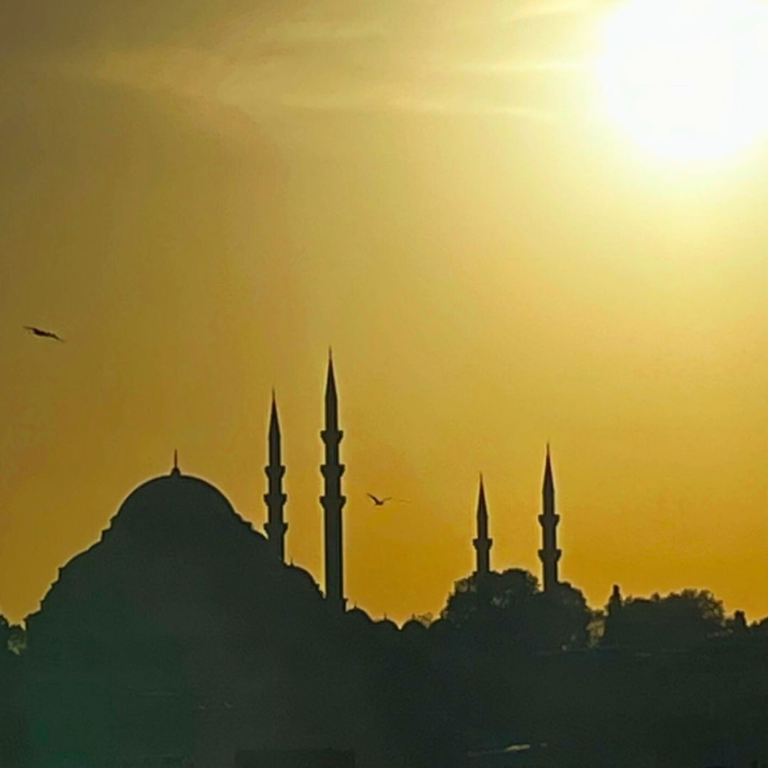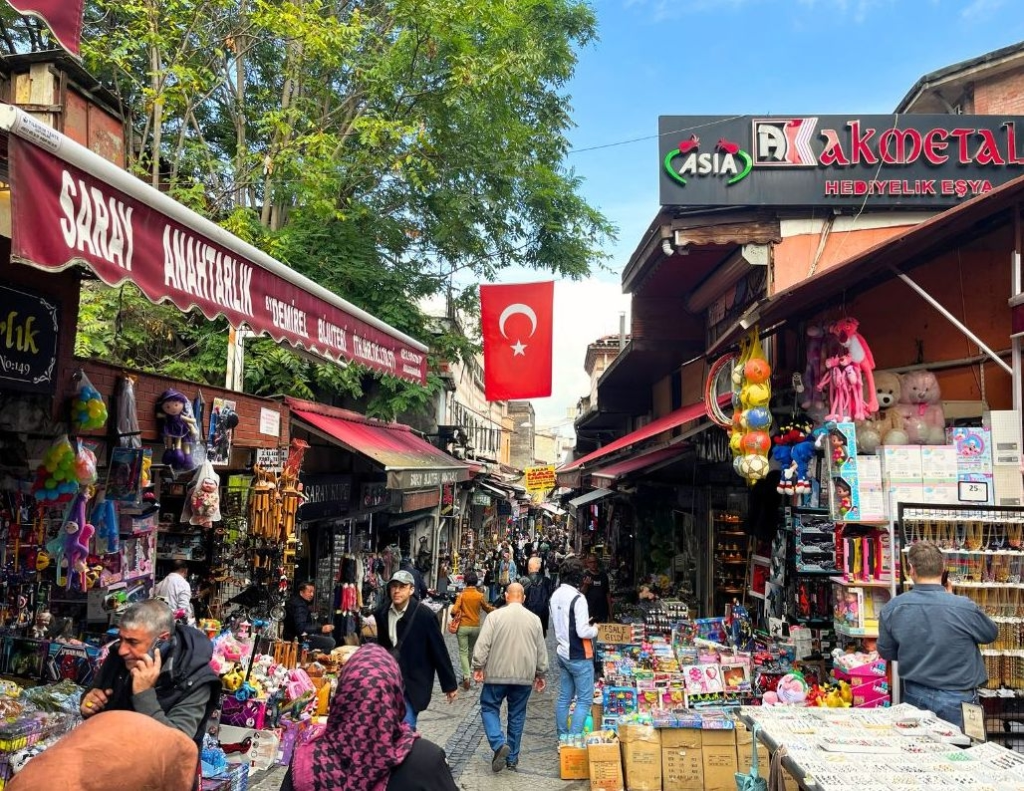
Here’s a practical guide to Istanbul — the stuff that actually helps when you’re there. It sure helped us. Being prepared allows you to fully enjoy the adventure of discovering this unique city.
The best time to visit Istanbul is April–June and September–October. You will have perfect weather and fewer crowds. Summer is hot and busy; winter can be cold, but it’s also atmospheric.
More about Istanbul, its attractions and what to do can be read in our previous post Explore Istanbul in 5 days.
MONEY
The official currency in Turkey is the Turkish lira, symbolised as TL or TRY. Before the trip, check online for the current exchange rate of your currency.
In Istanbul, contactless or card payments are widely accepted. A large number of hotels and restaurants accept credit cards. There are many ATMs in Istanbul, but some may charge an international transaction fee. VISA and Mastercard are easily accepted at ATMs in Istanbul.
In Turkey, you also need cash to spend, so be sure to carry a lot of small banknotes with you.
Some hotels and restaurants offer discounts for cash payments. For example, if you want to travel by public transport, they only accept cash, or if you are looking for a taxi, they also accept cash. Cash can also help with tipping. Street vendors also only accept cash.
Money should be exchanged in Istanbul, not at the airport or in a hotel, due to the unfavourable exchange rate. Do not change large amounts, as the exchange rate fluctuates throughout the day, and there is an exchange office at every step.
HEALTH INSURANCE
Before you go, be sure to take the Health Insurance Policy. It is important because your home insurance does not cover any medical treatment you might need. Unless you already have insurance that covers treatment abroad. To be sure, check before you go.
There are rather affordable insurance plans: https://visitorscoverage.tpk.ro/4turI4Je, https://ektatraveling.tpk.ro/C8TL7Hu1, or https://insubuy.tpk.ro/ckdx2H9D
The best choice you can make is to fill out the entrance form of the companies and see what they offer you for that specific trip. Read all and compare.
MOBILE & WIFI – E-Sim Card
Turkey is not in the EU, so the roaming is much more expensive for us.
That’s why everyone recommended that we buy an eSIM card or a physical SIM card when we arrive. I checked and learned that the physical one is not more affordable than eSIM.
You do not have that choice if your mobile phone does not offer an eSIM option. In that case, use a physical SIM on arrival. Note that most hotels offer free Wi-Fi.
Buying an eSIM is easy. You can try those companies and see which plan is best for you: AIRALO, YESIM, DRIMSIM.
First, choose the country you are visiting, then the number of days you will be staying, and you will see the available options.
Some of them offer only Internet traffic, without calls and SMS. However, that shouldn’t be a problem, as almost no one uses it anymore. After all, we mostly communicate through various social applications.
FINDING GOOD ACCOMMODATION
We always try to find accommodation close to the centre or to the main attractions. As for Istanbul, that is almost the same. From the areas to stay, we recommend Sultanahmet or Fatih.
Istanbul offers a wide range of hotels, catering to all levels of quality and comfort.
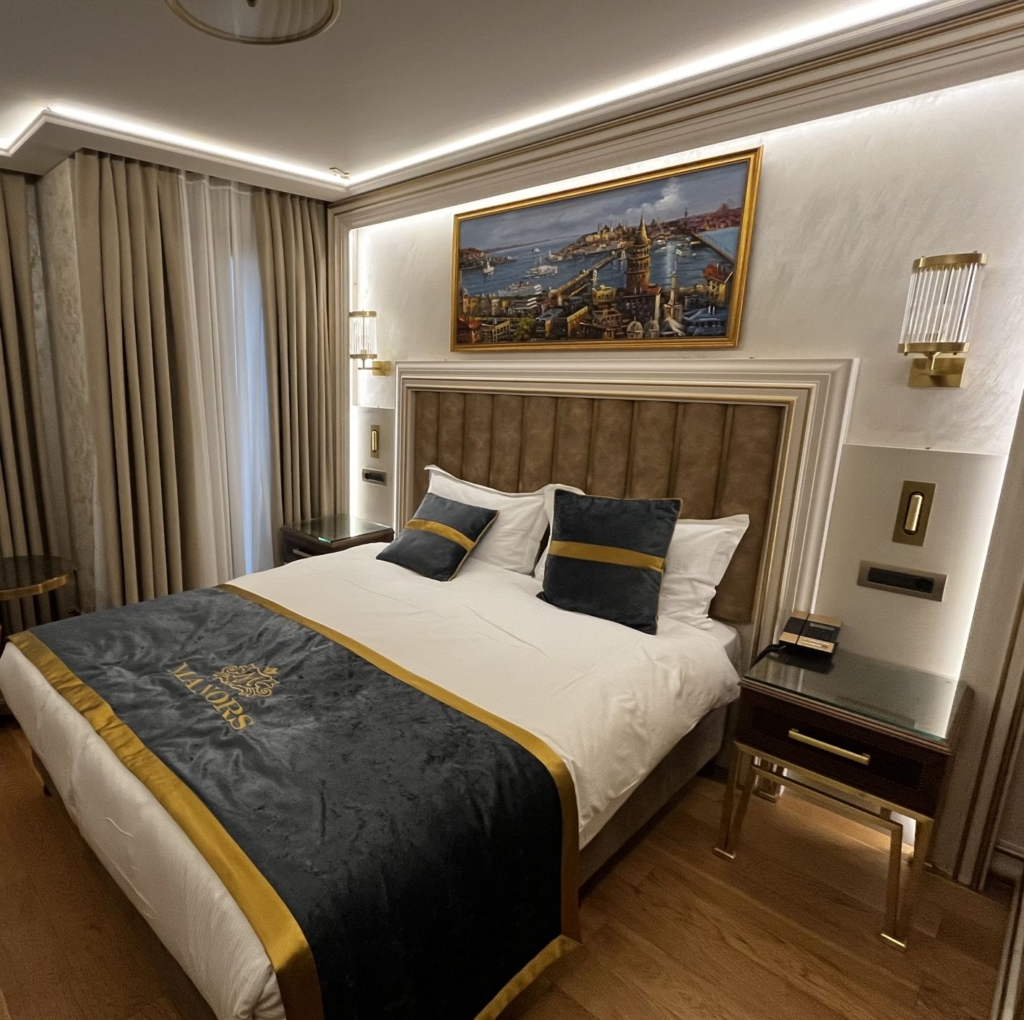
We stayed at Manors Hotel, which is almost on the main pedestrian street with a tram running along it. With direct line to all the main attractions.
Day and night, it was nice to walk through the streets and feel the life of the city.
The hotel was very comfortable and clean, with excellent services and a nice breakfast.
Prayer Times for Istanbul
Entrance to the mosque is free (a guide or audio guide is paid), and entry is possible only when there is no PRAYER (which is 5-6 times a day). The duration of the prayer is 10-15 minutes, except on Friday, when it is 40-50 minutes.
Before visiting, it is practical to check the prayer times for the specific dates. Times change daily and throughout the year.
IMPORTANT: When entering the mosque, it is mandatory to remove your shoes (ensure your socks are clean and without holes). Women must cover their heads with a scarf, and their arms and legs must also be covered; that is, no short sleeves or shorts are allowed.
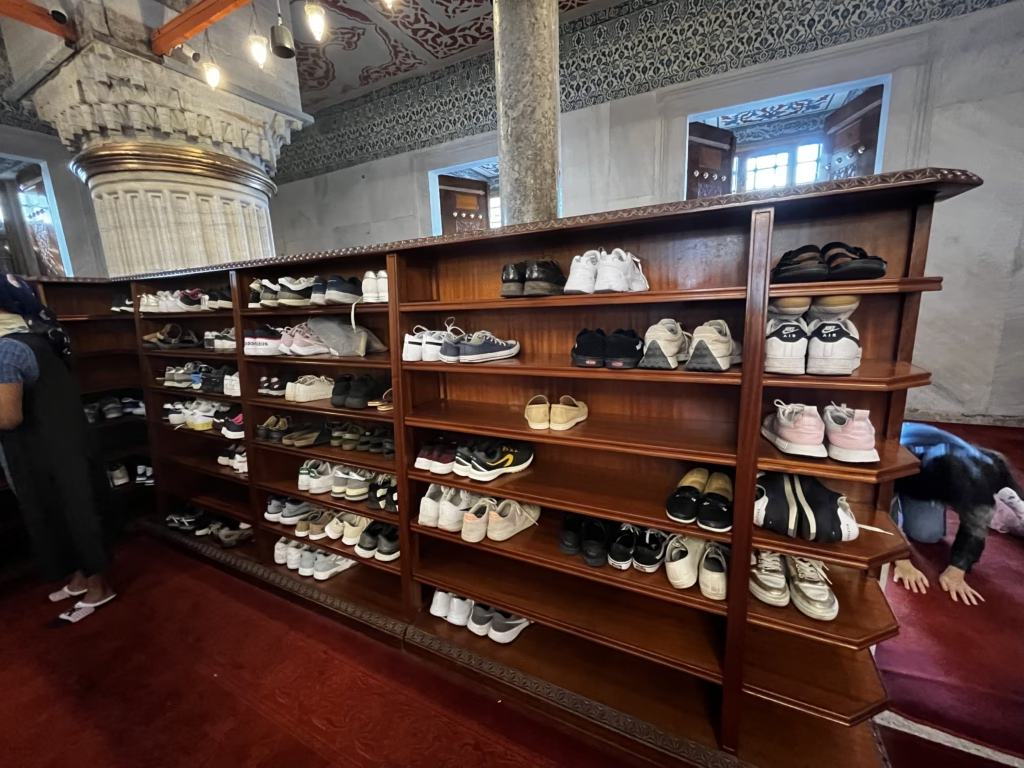
Check the times here: https://namazvakitleri.diyanet.gov.tr/en-US/9541/prayer-time-for-istanbul
TRANSPORT FROM THE AIRPORT
There are two airports in Istanbul: Istanbul International Airport (IST) and Istanbul Sabiha Gökçen International Airport (SAW). First, check where you are landing because they are on opposite sides of the Bosphorus Strait.
From Istanbul International Airport (IST)
- METRO – Metro Line M11 to Sultanahmet (centre)
- BUS – HAVAIST Bus shuttle, number HVIST-12
- TAXI – A taxi service is available at Istanbul Airport 24 hours a day.
https://istanbul-international-airport.com/transportation/airport-taxi
| Options | Price (€) | Price ($) | Price (₺) | Duration |
| Taxi | 36.20 | 42.10 | 1,700 | 50 min |
| Bus | 5.86 | 6.80 | 275 | 90 min |
| Metro | 1.88 | 2.20 | 88.83 | 66 min |
From Istanbul Sabiha Gokcen International Airport (SAW)
- METRO – Metro Line M4 to Kadikoy
- BUS – HAVABUS and HAVA.IST shuttles,
- TAXI – A taxi service is available at Istanbul Airport 24 hours a day.
https://istanbul-international-airport.com/transportation/airport-taxi
Uber taxis operate 24/7 in Istanbul, primarily serving as a booking platform for local yellow taxis and larger black taxis, rather than private cars.
PUBLIC TRANSPORT
To use public transportation (boats, subways, buses, tramways, and funiculars), you will need the Istanbul Kart, a magnetic card. You can find it in the small kiosks near all metro stations, piers, and bus stations.
Istanbulkart is a one-card solution for all transportation. Works on almost all public transport: metro, tram, Marmaray rail line, funicular, bus, metrobus, ferries, and sea buses.
The price in 2026. is 165 TRY (3,19€). When you pay this, they only give you a blank card. You can top up an Istanbul travel card yourself at the yellow top-up machines, or you can ask the staff at the newsstand to load money into it. Standard fare is 27 TRY.
Top-up suggestion: For a 3-5-day trip, load about 400-500 TRY in addition to the card cost.
You can purchase this card at Istanbul Airport and use it for the Havaist bus shuttle.
You can use it to pay for others (friends, family, etc.). If you have others accompanying you, you don’t have to buy two separate cards. As long as you have enough credits on your card, there is no limit to how many people can use it.
Another feature of Istanbulkart is that it offers discounts for transfers after the first use. The card, which charges the full price for the first time, allows you to ride the other three vehicles used within the 2-hour time window at a discounted rate each time.
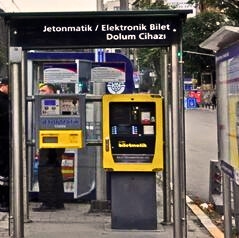
To top up your Istanbulkart, you can use the yellow machines located at metro, tram, and ferry stations. For example, at the tram station you see in the picture, the yellow-black machine with “Biletmatik” written on it is an Istanbulkart top-up machine. These machines enable passengers to top up in only 30 seconds.
To the left of this Istanbulkart machine, you see a second machine with “Jetonmatik” written on it. Those who need a one-time ticket can buy a one-way tram ticket from this token machine. However, one-time tickets are more expensive than the Istanbulkart tariff.
TRAM
On the European side, two lines are serving the city. It runs from 6 am to 11 pm. The tramway in Istanbul is very clean and air-conditioned.
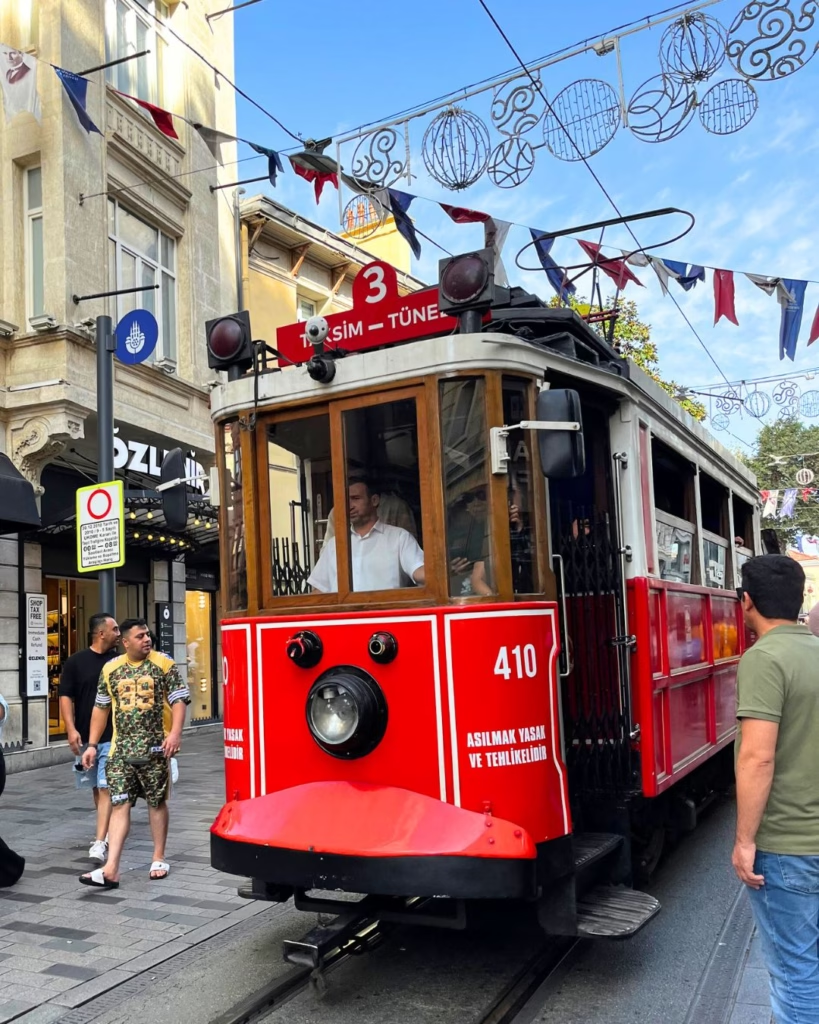
The T1 line will enable you to access the city’s main attractions. The main stops of T1 are:
- Kabataş – Dolmabahçe Palace, Taksim connection with the funicular (F1) to go to the pier to the Princes’ Islands and Kadıköy.
- Tophane – Museum of Modern Art in Istanbul.
- Karaköy – Connection Tünel funicular (T), which will drop you on Istiklal Street.
- Eminönü – Spice Market.
- Sirkeci – Train station and connection to the Marmaray.
- Sultanahmet – Topkapı Palace, Hagia Sophia, Blue Mosque, Basilica Cistern, Archaeology Museum.
- Beyazit – Grand Bazaar.
Taksim Tramway on Istiklal Street in Istanbul look like trams out of an old movie. Two lines are in service: the first, on the European side (T2), runs down İstiklal Street from Taksim Square to Tünel, and the second (T3) is on the Asian side, departing from the pier and heading to Kadıköy, then to the Moda neighbourhood.
METRO
There are currently lines on both the European and Asian sides, but these two systems are not yet connected. Some of the lines do not operate overnight. https://www.metro.istanbul/en/YolcuHizmetleri/AgHaritalari
On the European side, Metro line M11 goes to Istanbul International Airport (IST), and on the Asian side, line M4 is connected to Sabiha Gökçen Airport.
Marmaray: the European side and the Asian side are connected by the metro, which passes under the Bosphorus. It allows you to go from Sirkeci to Üsküdar on the Asian side.
BUS
Except for Sultanahmet (accessible by tram), buses operate throughout the city. Destinations and major stops are written in yellow on the sides of the buses.
FERRY
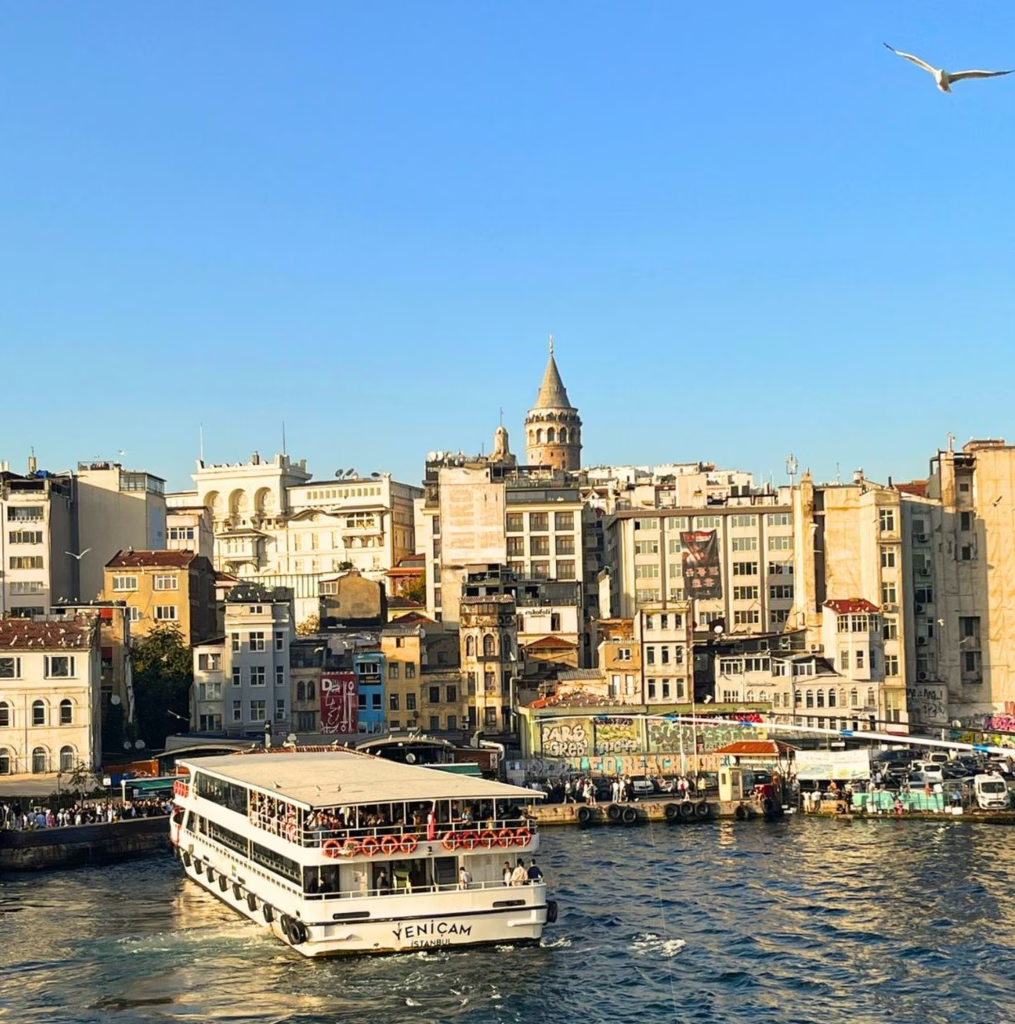
You can use your Istanbul Kart to access the boats or buy your ticket at the pier. The price depends on the route you wish to take. The lowest fare costs 31.38 TRY. These public boats are also useful for reaching the Princes’ Islands for the price of 137.57 TRY.
If you want to cruise on the Bosphorus, there are: https://sehirhatlari.istanbul/en/price-list/bosphorus-tours-78
Short Bosphorus Tour (2 hours, 340 TRY). The cruise takes you from Eminönü to Istinye (well past the second bridge), and back.
Long Bosphorus Tour (6 hours, 640 TRY). Goes all the way to Black Sea from Eminönü harbour and back.
THE FUNICULAR
In Istanbul, there are also funicular lines, but 2 of them are the oldest and most popular:
– Karaköy-Tünel (T): The Tünel funicular is the second-oldest underground transport system after the London metro. Connects Karaköy (bottom) with the southern end of İstiklal Avenue (top).
– Taksim-Kabataş (F1): It allows you to go from Taksim Square to Kabataş and connect to the T1 tram line. The Kabataş stop is close to the Dolmabahçe Palace.
They run from 6:00 a.m. to 12:00 p.m. Price: 10 TRY.
WHAT TO EAT AND DRINK
DRINKS
TEA – If you ask what the most common drink in Turkey is, the answer will be tea, even before water.
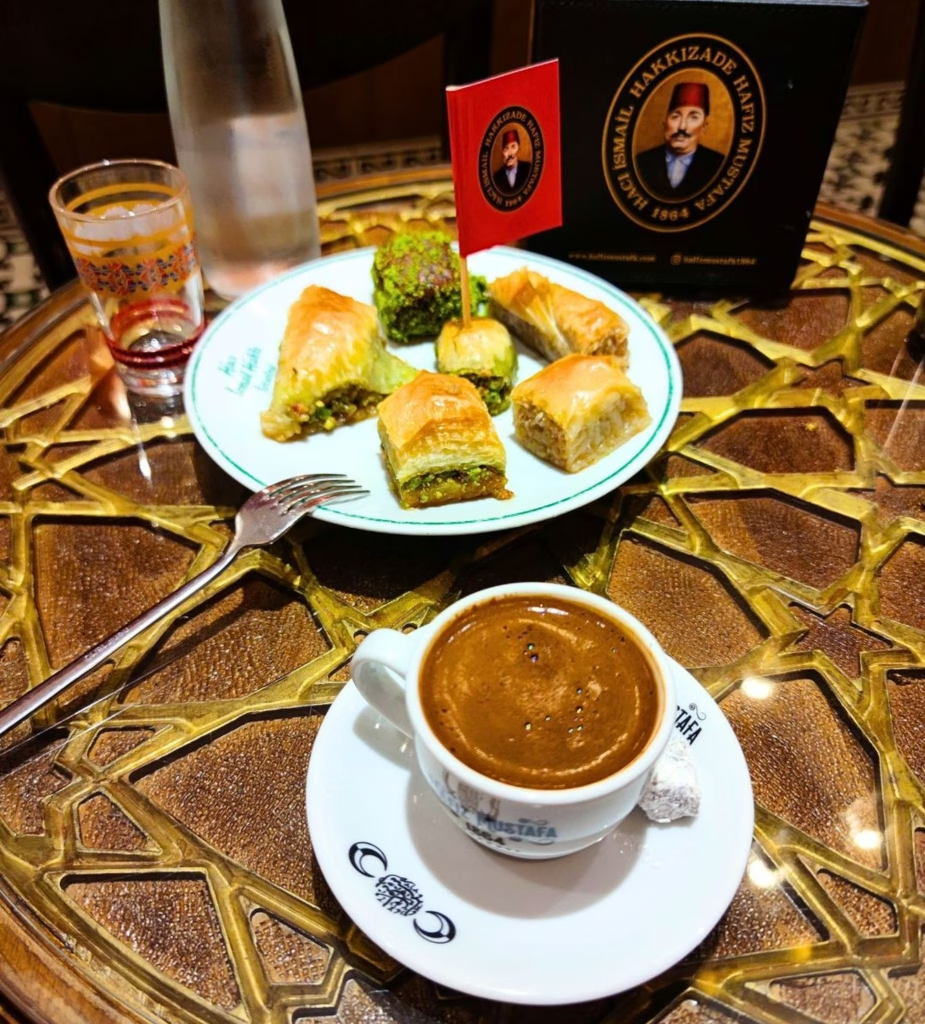
TURKISH COFFEE – The oldest coffee-consuming people in the world are Turks. Originating from Yemen and Ethiopia, the first coffee beans arrived in Istanbul in the 16th century, at the order of the Sultan.
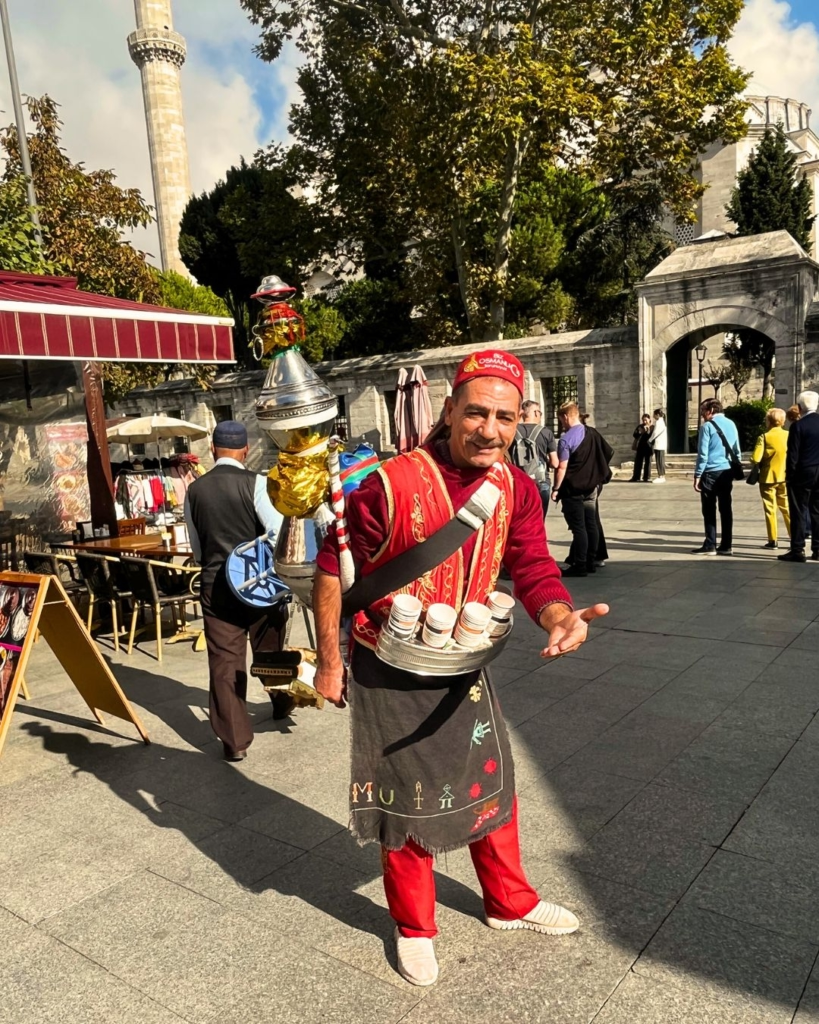
SHERBET – This is what people in the Ottoman era would drink in large quantities before the emergence of the famous brands of carbonated beverages today. Sherbet is primarily prepared from fruits, seeds, sugar, and various spices such as cardamom and cinnamon. Rose and pomegranate are the main flavours.
FOOD
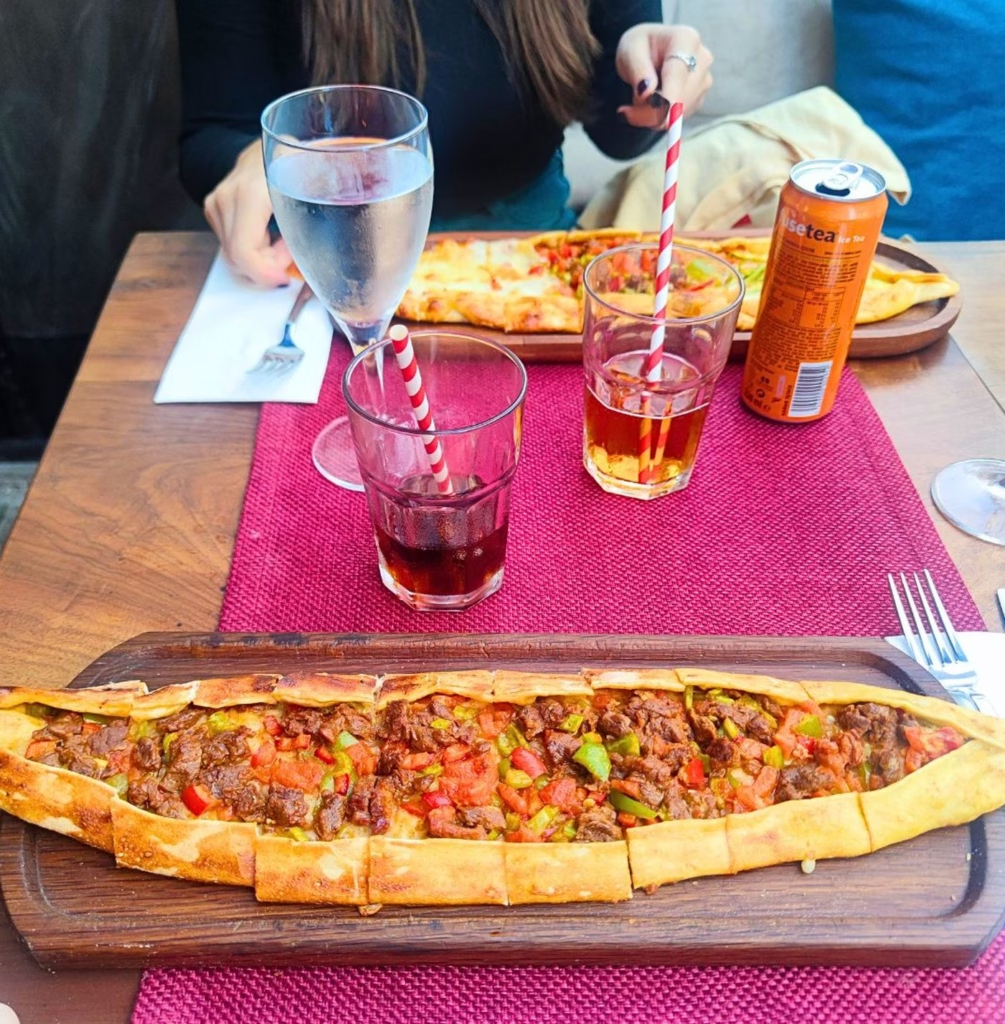
PIDE – It is a delicious flatbread, grilled and served topped with minced meat and/or vegetables. It is traditionally made in a stone oven with a wood fire.
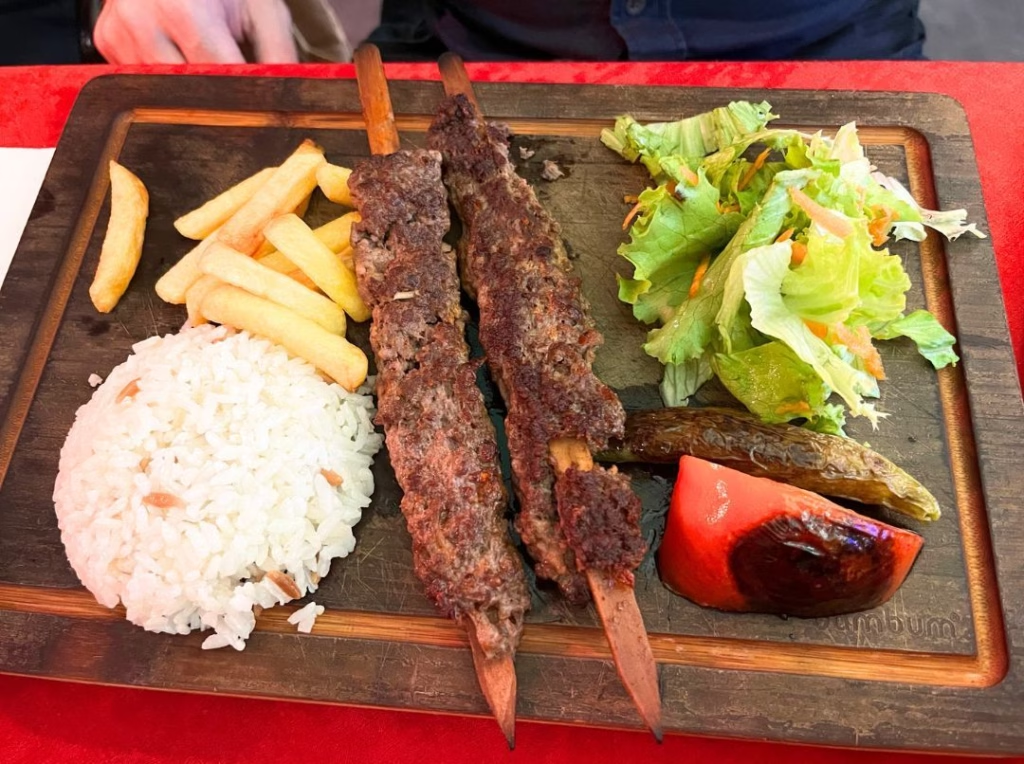
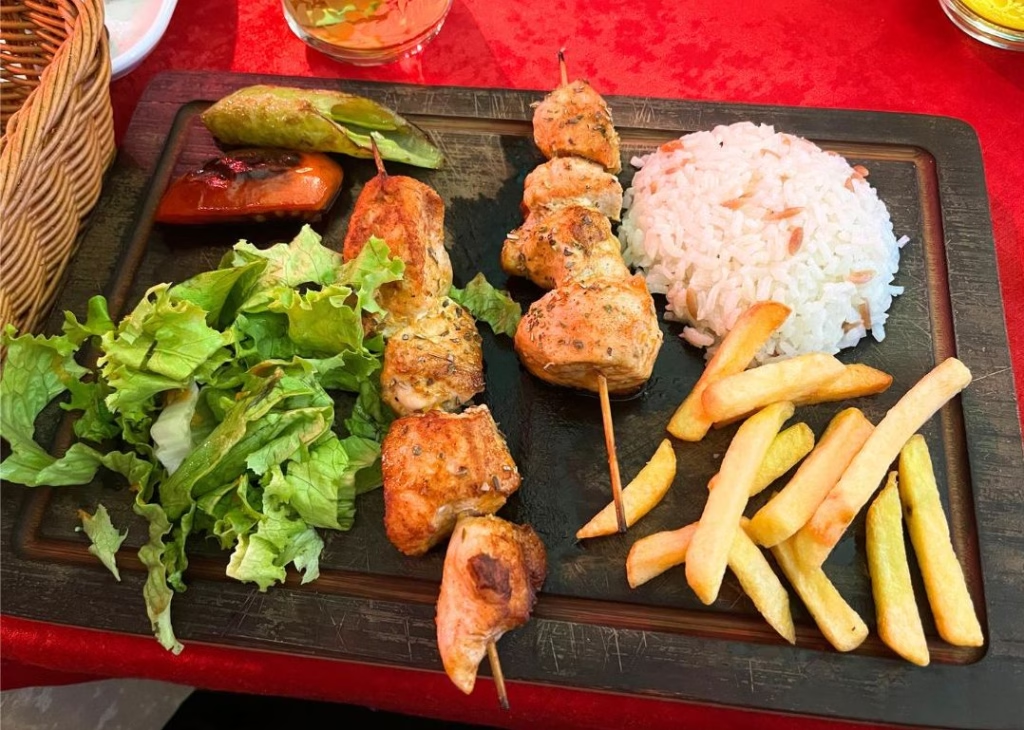
KEBAB – the national dish of Turkey, kebab is meat, usually lamb, grilled on a skewer. “Doner” kebab refers to a rotating spit, while “shish” kebab is a skewer of meat, peppers, onions, and tomato.
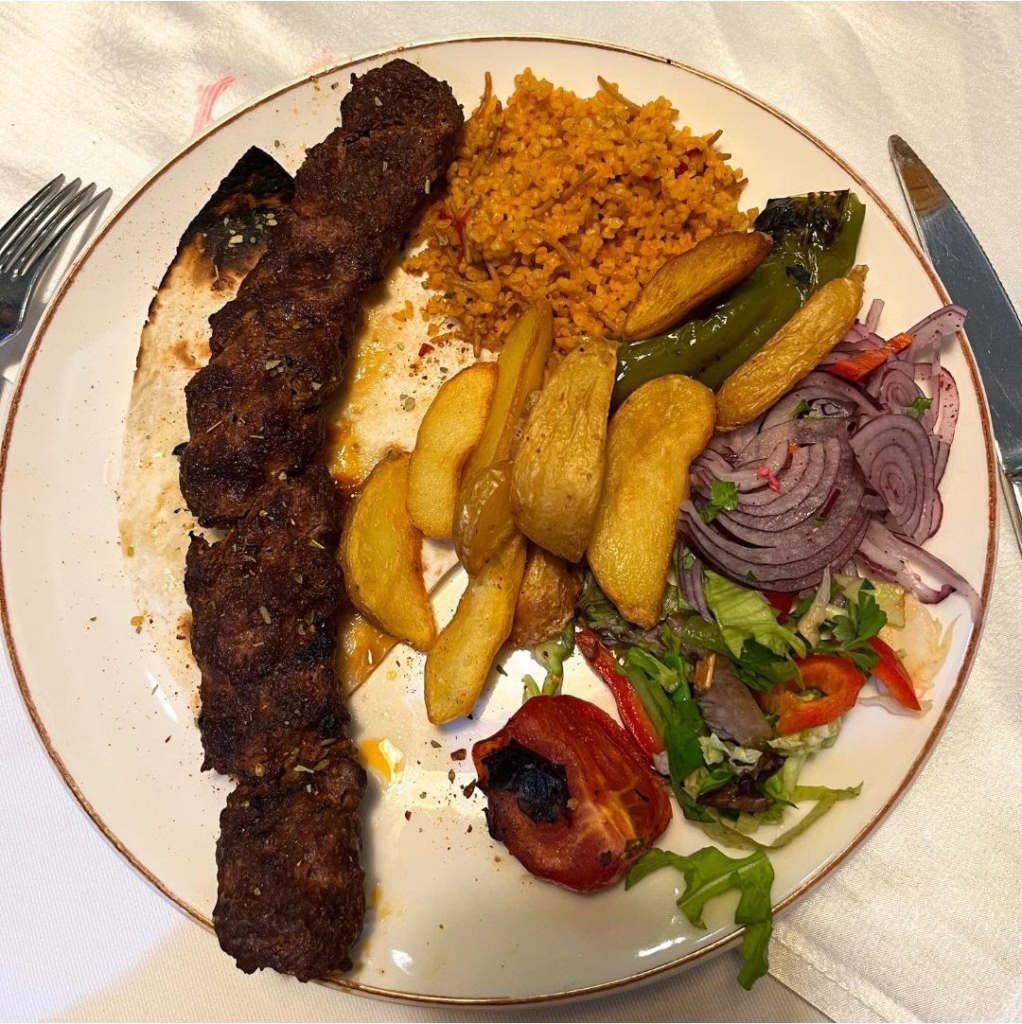
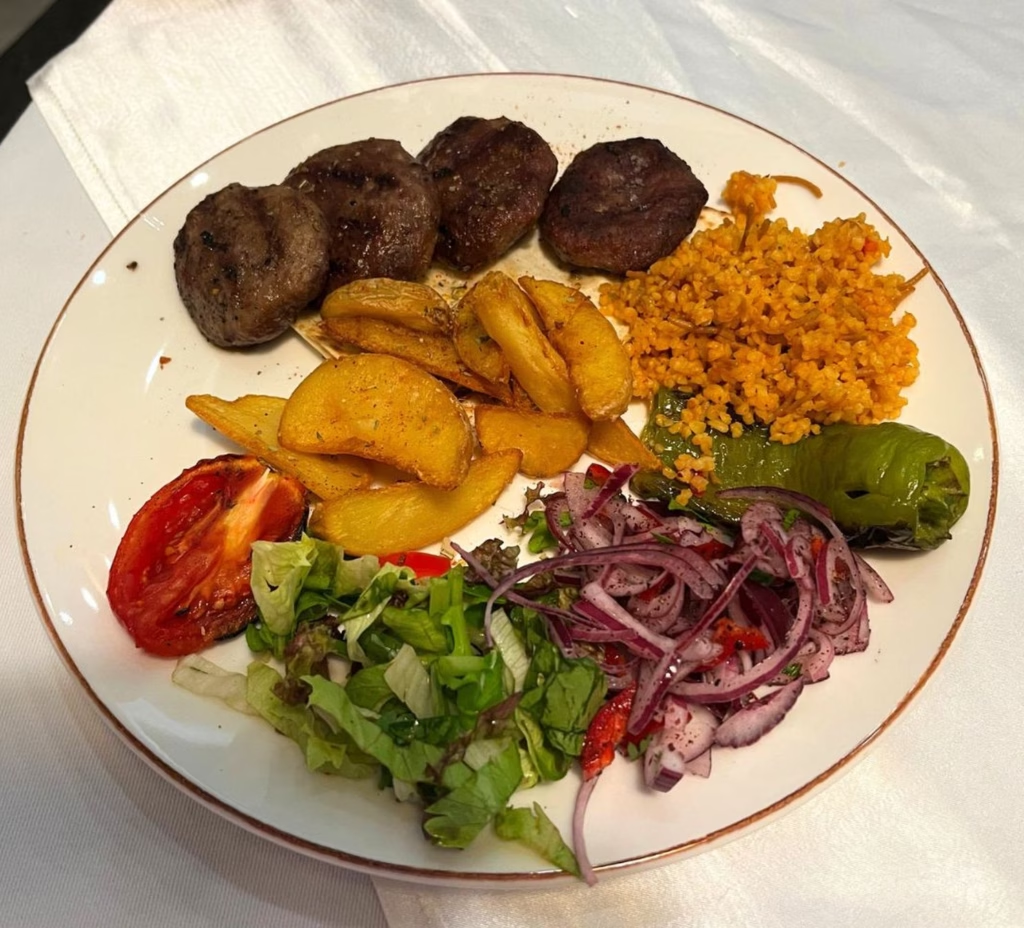
KÖFTE – spiced Turkish meatballs served with rice, grilled peppers, and bread.
BÖREK is a dish of filo pastry filled with cheese, spinach, or meat.
STREET FOOD
SIMIT is a pastry in the form of a braid, sprinkled with sesame or poppy seeds. It is sold blank or cut and spread with melted cheese.
KUMPIR is a potato baked with its skin, stuffed with different fillings. You choose what will be in it: cheeses, vegetables, and meat sauces. Butter and cheese are almost mandatory.
BAKED FISH IN A PASTRY – balik ekmek, fish fillet is grilled or fried, and served in a pastry with onions and lettuce, sold near Eminönü and Karaköy.
SWEETS
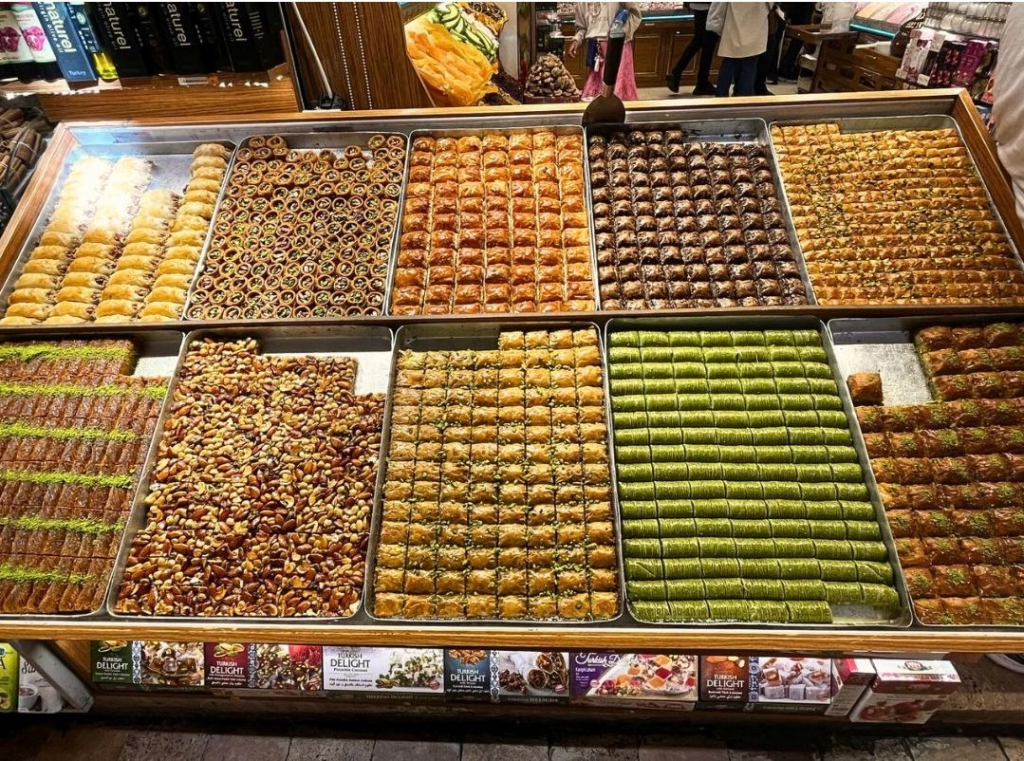
BAKLAVA is the most famous traditional Turkish dessert, made from fine layers of phyllo dough, filled with nuts, and soaked in a sugar syrup. There are different versions of baklava with various fillings.
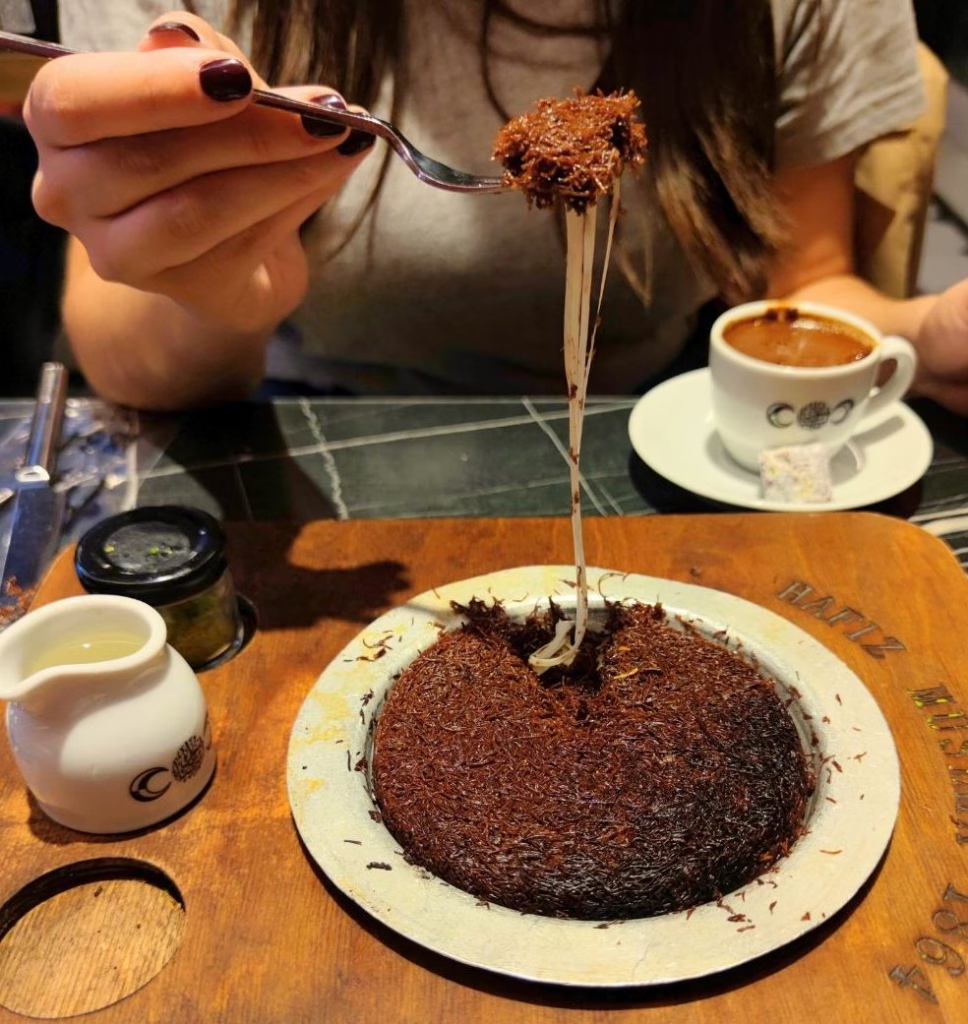
KUNEFE is a filo pastry dish made from a spinning dough called kataifi, with cheese in the filling. The dough is soaked in a sugar syrup, and unsalted soft or semi-soft raw milk cheese is placed between each layer. This dessert is baked in copper plates and served hot, sprinkled with ground pistachios or walnuts.
LOKUM, the soft cubes of sugary gel flavoured with everything from rosewater to mint, has been eaten in Turkey since the 18th century. In the world, it is often sold as “Turkish delight” or referred to as a Turkish delicacy.
TULUMBA is a crispy, very sweet and syrupy Turkish dessert with an oblong shape.
One of the best places to try some of Turkey’s typical desserts is at the century-old Hafiz Mustafa 1864 shop. The speciality is baklava and lokum, and the packaging is lovely, making them an excellent souvenir option.